Neto by Maropost and BigCommerce are both powerful ecommerce platforms widely used by Australian retailers and ecommerce merchants. When choosing between the two, the decision is less about the ecommerce features and more about the differences in the way they are built and operate. In this article, we’re comparing Neto and BigCommerce side by side, including core capabilities, ideal use cases, and key differences to help you make an informed decision.
Neto is great for operations-heavy businesses that want a single operational source of truth. BigCommerce is more suited for businesses that expect their ecommerce platform to be a commerce layer rather than the system of record for operations. Both platforms are built for different operational models and levels of system ownership. Let’s see how they compare in more detail.
How Neto and BigCommerce stack up: unified vs modular commerce
-
Neto is designed as an all-in-one commerce suite, where inventory, order management, shipping workflows, wholesale operations, and multi-channel selling can all be handled inside one system, which is best suited for businesses that expect the ecommerce platform to act as an operational backbone.
-
BigCommerce is built as an open SaaS ecommerce platform with flexible APIs and composable storefront capabilities. It is typically well-suited to businesses that manage their core operational workflows through external systems such as ERP, OMS, or PIM solutions.
Ideal use cases for Neto
Overall, Neto is a great option for businesses that:
-
Rely heavily on operational efficiency and want to manage everything in one central platform
-
Require high inventory accuracy to protect margin and fulfilment performance
-
Manage stock across multiple locations (warehouses, stores, 3PLs)
-
Run in-house warehouse workflows (pick/pack, bulk processing, exceptions)
-
Generate significant revenue from B2B/wholesale, not just B2C
-
Sell across marketplaces and need centralised control over inventory and order routing
Ideal use cases for BigCommerce
BigCommerce is best for businesses that:
-
Prioritise API-first flexibility and headless or composable builds
-
Want to compose solutions using best-of-breed tools rather than rely on one all-in-one system
-
Already run operational workflows in external systems like ERP or WMS
-
Have strong internal technical capability or agency support to manage integrations and custom architecture
-
Are comfortable coordinating multiple vendors across their tech stack
Recommended: See how Neto and BigCommerce compare at a glance.
How Neto and BigCommerce compare on core commerce features
Below, we’ve put Neto and BigCommerce side by side to help you better understand how they stack up across key capabilities:
Storefront flexibility and customisation
Both platforms let you build storefronts and customise your commerce site. But BigCommerce places more emphasis on flexible, developer-led storefront experiences, while Neto focuses more on running the operational side of the business.
-
BigCommerce offers strong storefront customisation tools, especially with its open-source framework (Catalyst) built on technologies like Next.js, React, and the GraphQL Storefront API. This might be an advantage for brands that prioritise composable architecture, visual design, and marketing flexibility.
-
Neto can deliver fully functional storefronts, but the platform’s main focus is on operational capabilities. It offers a visual builder and a library of professional themes, but achieving a highly polished, custom look usually requires developer support. Neto is better suited for businesses where operational flexibility matters more than a flashy design.
Point of sale (POS) management
When comparing Neto and BigCommerce on POS management, the key difference is that Neto provides built-in POS capabilities as part of a unified commerce platform, while BigCommerce relies on integrations for POS management.
-
Neto includes native POS functionality designed to work alongside your ecommerce engine within the same platform. This allows retailers to sync inventory between online and in-store sales in real time, manage multiple stores, and – most importantly – maintain a single operational view without relying on external systems.
-
BigCommerce can also support in-store selling, but it requires you to connect a third-party POS system (e.g., Square, Lightspeed, Clover, or ConnectPOS), which can make multi-store management and real-time inventory sync between POS and ecommerce more challenging. While BigCommerce’s APIs can connect these systems, you still end up managing two separate platforms and paying two separate subscription fees.
Inventory, purchasing, and stock control
In terms of inventory management, purchasing, and stock control, Neto treats those as core operational capabilities, while BigCommerce provides the basics and leaves more advanced workflows to external apps and integrations.
-
Neto’s advantage is that it treats inventory and purchasing as the "heart" of the software, not an add-on. With Neto, you can easily manage multi-location inventory, backorders, stock reservations, purchase orders, landed costs, and demand forecasting directly in the system without relying heavily on external tools, as these come out of the box. Neto also includes native GST and duty calculations on purchase orders, simplifying compliance for Australian importers.
-
BigCommerce does support basic inventory management, including multi-location inventory, but deeper operational capabilities rely on integrations with external systems like ERPs or WMS. Functions such as backorders, stock reservations, purchase orders, and demand forecasting are typically handled outside the platform through third-party tools or custom workflows.
Order processing, shipping, and warehouse workflows
The contrast between Neto and BigCommerce is most apparent in order processing and warehouse workflows. Neto is essentially a Warehouse Management System (WMS) with a website attached, whereas BigCommerce is a storefront that expects you to plug in a separate WMS.
-
Neto offers built-in tools for managing order processing and warehouse workflows directly within the platform. It lets you handle bulk order processing, pick and pack workflows, shipping label printing, barcode scanning, custom pick slips, and operational returns and exchanges without needing to pay for or sync data with additional shipping or WMS software. Neto also includes built-in shipping options for Australian carriers such as Australia Post, StarTrack, and CouriersPlease.
-
BigCommerce provides only the essential order management tools, but it is primarily designed to "hand off" the fulfillment process to external WMS systems like ShipStation or Starshipit. Advanced warehouse workflows are typically managed through these third-party apps rather than within the BigCommerce dashboard itself.
B2B/ wholesale workflow management
Neto can handle the heavy lifting of B2B wholesale operations natively, while BigCommerce focuses on the transactional experience, often delegating back-office financial controls to external systems.
-
Neto treats the entire wholesale relationship as a core part of the system. It basically acts as a lightweight ERP and natively supports highly granular customer price groups, credit limit management, invoice terms, and account statements, making it a stronger fit for businesses that need complex B2B functionality without the cost or complexity of syncing data with an external finance or ERP tool.
-
BigCommerce supports basic B2B wholesale management needs, such as buyer portals, customer price groups, and invoicing. However, deeper operational capabilities like managing credit limits are gated behind the "B2B Edition bundle" rather than being a core platform feature.
Payments and checkout flexibility
In terms of payments and checkout flexibility, the difference between Neto and BigCommerce comes down to whether you want a "ready-to-go" system or one you can fully customize.
-
BigCommerce offers a Checkout SDK, which allows developers to completely customize the checkout experience. You can add custom fields, change the entire layout, or build a fully headless checkout experience. It also provides flexible payment options, supporting 65+ payment gateway integrations and hundreds of local payment methods across many countries.
-
Neto supports major global and APAC-specific gateways (like Stripe, PayPal, eWAY, and SecurePay), standard BNPL options (like Afterpay and ZipPay), and digital wallets, but the overall ecosystem of supported payment providers is smaller compared to BigCommerce. In terms of checkout, Neto is all about stability: although you can’t fundamentally alter the checkout architecture, it’s reliable and stays perfectly synced with your back-office orders without you having to touch any code.
Selling across marketplaces in Australia
The key difference between Neto and BigCommerce in marketplace selling capabilities in Australia is that Neto provides more centralised control over marketplace operations within the platform itself, while BigCommerce relies on integrations.
-
Neto treats marketplaces as native sales channels rather than external sites. With Neto, you can easily control listings, sync inventory across channels, and route marketplace orders directly from your Neto dashboard. And because it’s purpose-built for Australian businesses, it lets you sell across 30+ leading Australian marketplaces, including Bunnings, Kogan, and Qantas (plus global marketplaces like eBay and Amazon Australia).
-
BigCommerce supports native connections to giants like Amazon, eBay, and Walmart, but relies on its Feedonomics engine (which it now owns) or third-party apps to handle multi-channel selling across local Australian marketplaces. Feedonomics is still a "middleware layer" that adds sync latency and potential points of failure compared to Neto's native engine.
Pricing and total cost of ownership: all-in-one (Neto) vs integrated stack (BigCommerce)
BigCommerce is cheaper to begin with, which makes it an attractive option for many small merchants across the globe, including Australia. However, BigCommerce uses a tiered pricing structure tied to your revenue, which automatically upgrades your plan as your trailing 12-month sales increase, which can lead to increased monthly costs as your revenue grows.
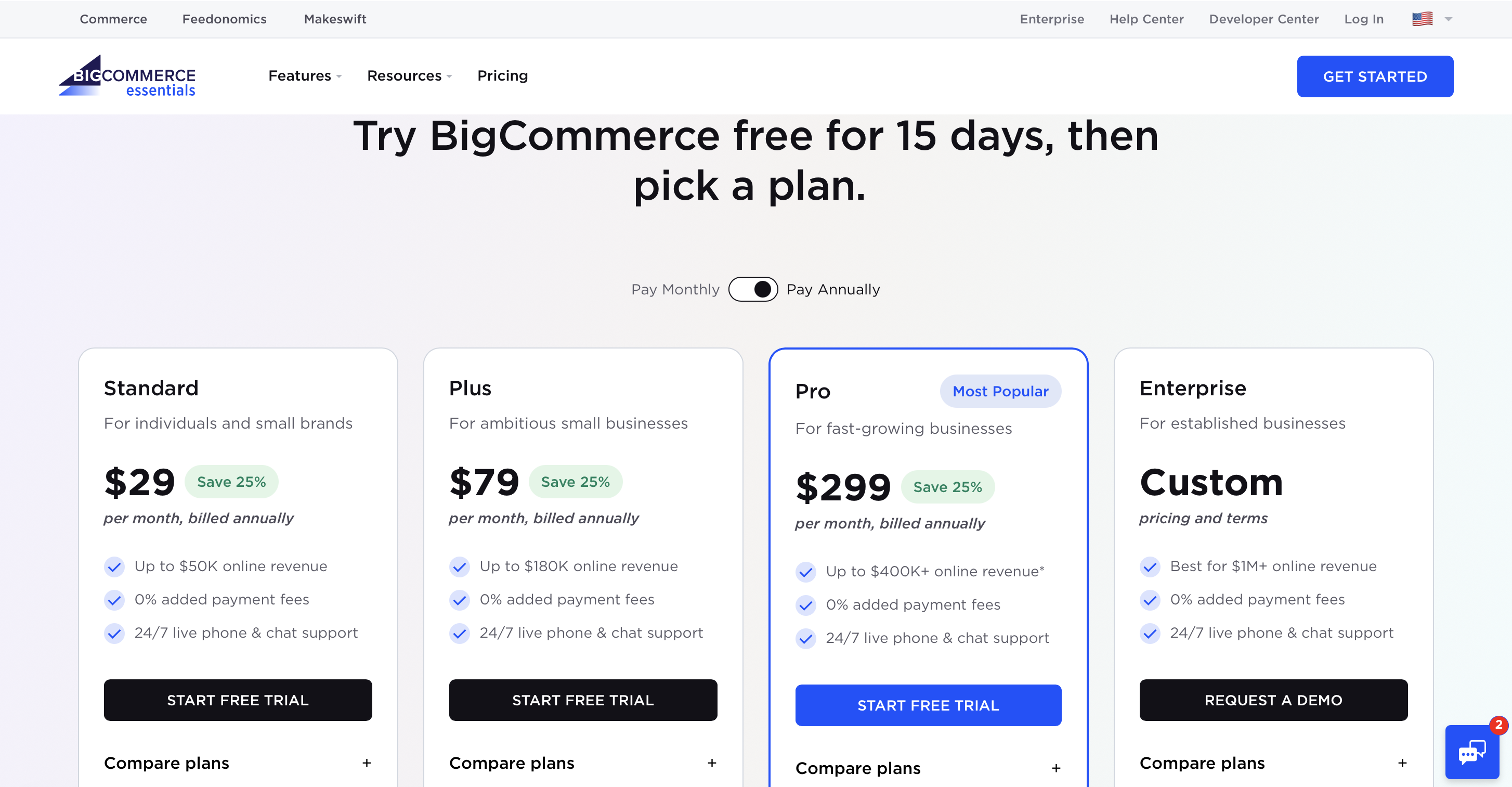
More importantly, with BigCommerce, you’ll often need to integrate multiple external systems and third-party apps to handle operational complexity. These additional subscriptions can quickly add up, creating an ongoing “app tax” that increases your total costs.
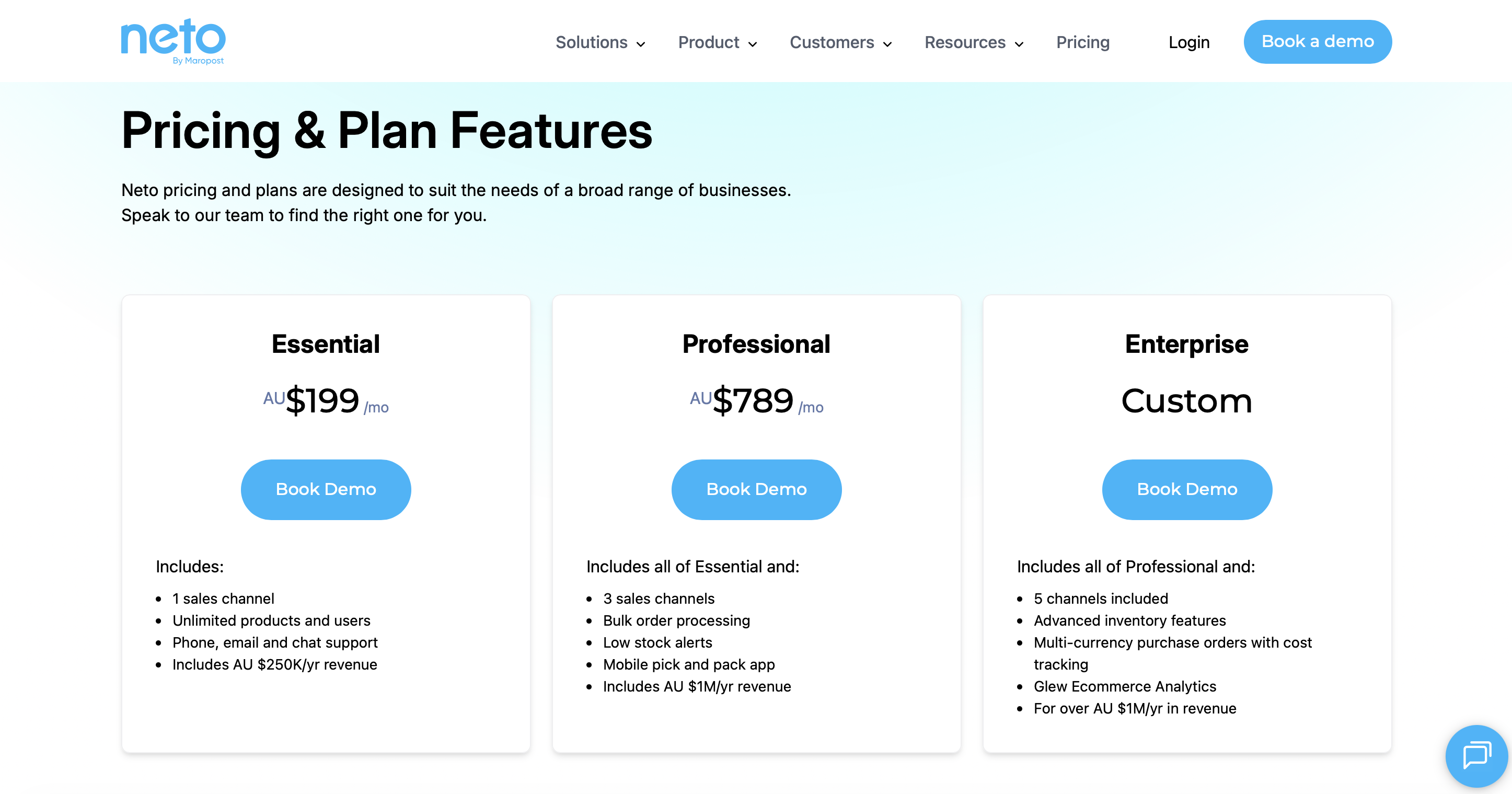
Although Neto may seem more expensive initially, its all-in-one unified commerce platform natively supports POS, inventory management, fulfilment, B2B wholesale workflows, and marketplace selling, which can significantly reduce reliance on third-party tools and lower the overall total cost of ownership for high-volume retailers.
What’s the best fit for Australian businesses? How to decide between Neto and BigCommerce
Both ecommerce platforms have been serving the needs of Australian retail and ecommerce merchants since 2009, and both were founded in Australia. But they were built for different types of businesses and operational models. When deciding between Neto and BigCommerce, you are basically choosing between operational ownership and integration dependency.
Choose Neto if you want to consolidate operational workflows into one platform, especially if your business relies on inventory-heavy, multi-channel retail, and complex fulfilment. It is ideal for businesses looking to simplify their tech stack, reduce vendor dependency, and lower the total cost of ownership.
Choose BigCommerce if you prioritise composable architecture and flexible customisations. It’s best for businesses that view the storefront as their primary competitive advantage and prefer to build a "best-of-breed" ecosystem using various specialised apps and integrations – without coupling everything into one system.
And when it comes to Australian businesses in particular, Neto is known to be the best ecommerce platform for local retailers because it was built with the needs of Australian merchants in mind.
Here is why Neto stands out for local sellers:
-
Built-in local shipping: Neto includes native integrations with major Australian carriers like Australia Post and StarTrack. This allows you to print labels and manage shipping directly within the platform without paying for shipping software.
-
Native marketplace integrations: You can connect directly to local marketplaces like Kogan, and Bunnings. Neto keeps your inventory and listings perfectly synced across Australia’s biggest marketplaces without needing third-party "connector" apps.
-
Local compliance: Neto handles GST and Australian tax invoicing natively. This ensures you stay compliant without needing manual workarounds or external accounting plugins.
-
Australian-based support: With Neto, you get access to a support team that operates in your local time zone and understands the specific nuances of the Australian retail landscape.
Book a demo now to see Neto in action and learn how it can help you scale your business without relying on external tools and integrations, bring full operational control in-house, and ultimately reduce your TCO.
Frequently Asked Questions (FAQ)
Can I migrate from BigCommerce to Neto?
Absolutely yes! Neto supports migration from other popular ecommerce solutions. You can either use Neto’s built-in import tools to transfer your products, SKUs, order history, and customer data or work with a migration partner. Tools like Cart2Cart or LitExtension can help you migrate your BigCommerce data in a few steps without needing extensive technical skills. These tools also allow for a demo migration, so you can review the results directly in your new Neto store before the full replatforming.
Do Neto or BigCommerce charge transaction fees?
Unlike Shopify that charges additional transaction fees when merchants don’t use Shopify Payments, Neto and BigCommerce do not charge transaction fees. With both platforms, you only need to pay the standard payment processing fees charged by your chosen payment provider.